A mobile-friendly web directory which lists websites to help them get discovered by users and search engines.

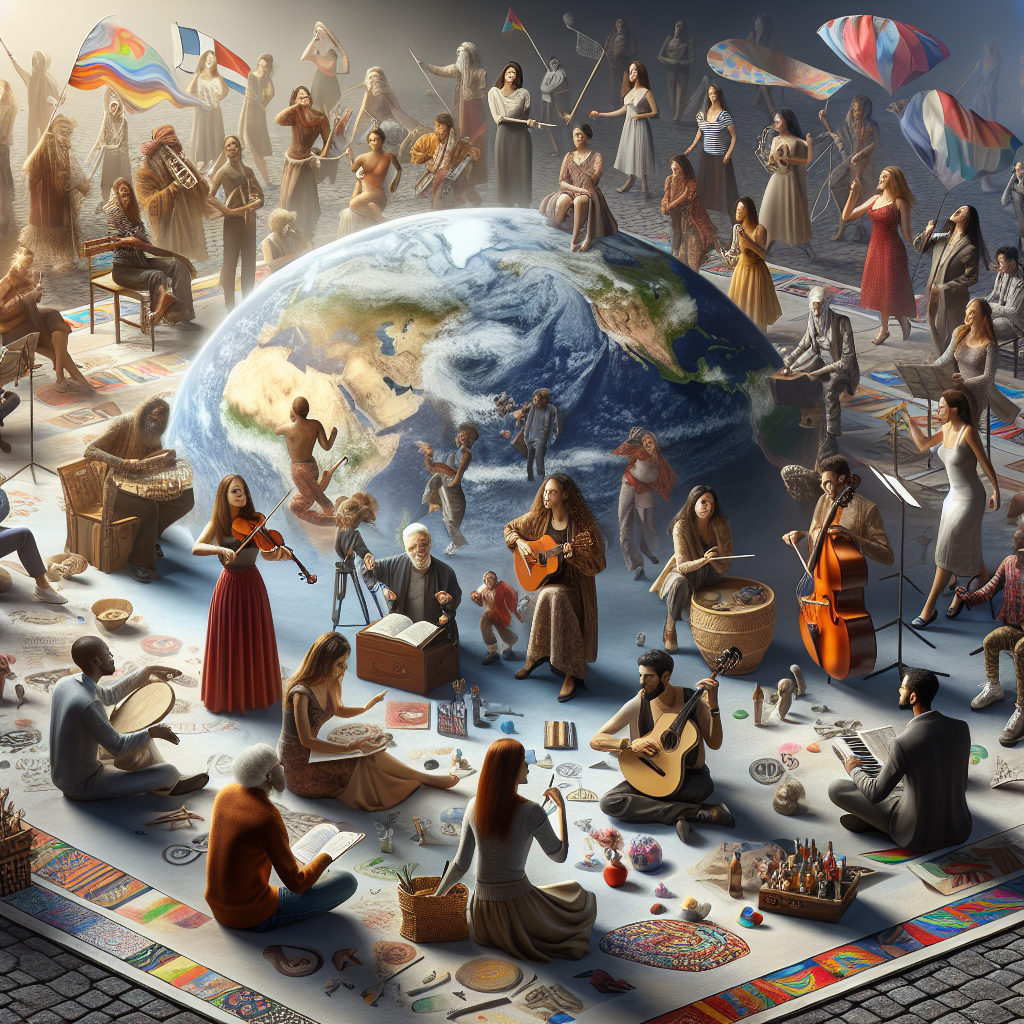
The arts are a broad family of creative practices that use skill, imagination, and intention to express ideas and emotions. They include long-established forms such as painting, sculpture, music, theatre, dance, literature, and architecture, as well as newer and hybrid forms like film, photography, animation, video games, digital illustration, and interactive media. Despite their variety, all arts share a common purpose: they translate human experience into something perceivable—something that can be seen, heard, felt, or interpreted.
Arts also operate as a social activity. Even solitary work is made in conversation with influences, traditions, audiences, patrons, and communities. In that sense, art is both personal and communal: it reflects individual voice while participating in collective culture.
People often think of art as an “extra,” but it is woven into daily living. The playlist that motivates a workout, the typography on a favorite product, the design of a public park, and the stories that shape identity all come from artistic choices. Arts are a way of making meaning when facts alone feel insufficient.
Visual arts primarily engage sight: drawing, painting, sculpture, ceramics, printmaking, photography, and contemporary installation. They can be representational (showing recognizable subjects) or abstract (focusing on form, color, and composition). Visual art trains attention—inviting viewers to notice detail, symbolism, and the quiet drama of materials and space.
Performing arts unfold in time: music, theatre, dance, opera, and performance art. They depend on presence—whether in a concert hall or a small street corner. Performance can be rehearsed with precision or shaped through improvisation. What makes it powerful is its immediacy: the audience shares the same moment as the artists, creating a unique, unrepeatable exchange.
Literary arts include poetry, fiction, drama, essays, and emerging forms such as spoken word and digital storytelling. Through narrative, metaphor, and voice, literature helps people interpret their lives. It also expands language itself, inventing new ways to name experience and challenge assumptions.
Applied arts sit at the intersection of beauty and function: graphic design, fashion, industrial design, interior design, and architecture. These fields shape the built and visual environment, influencing how people move, feel, and interact. A well-designed chair, poster, or building is not only efficient; it communicates values—comfort, accessibility, sustainability, or prestige.
Digital arts encompass animation, video art, AR/VR experiences, interactive installations, and game design. These forms invite participation: audiences may choose paths, manipulate outcomes, or become co-creators. The digital realm also expands access, allowing artists to publish globally, collaborate across borders, and experiment with new tools.
Behind every finished artwork is a process that includes experimentation, failure, revision, and decision-making. Skill matters—artists practice technique, craft, and discipline—but art is not only about technical perfection. It is also about curiosity and risk: choosing what to emphasize, what to omit, and how to guide attention.
Many artists move through a cycle of research, sketching or drafting, building prototypes, seeking feedback, and refining. Even when work appears spontaneous, it often rests on years of training. The most compelling art frequently balances control with openness, allowing accidents and surprises to reshape the original plan.
Art reflects society, but it also influences it. Songs can become protest anthems, films can shift public opinion, and novels can humanize people who are reduced to stereotypes. Art can celebrate cultural identity, challenge injustice, or question norms that feel inevitable.
At the same time, arts can be a bridge between communities. Collaborative projects—community murals, public concerts, local storytelling events—create shared spaces where people meet as neighbors rather than strangers. In multicultural societies, the arts offer ways to honor differences without forcing sameness.
Arts education builds more than artistic ability. It strengthens observation, patience, collaboration, and critical thinking. Students learn to interpret symbols, analyze choices, and communicate creatively—skills that transfer to science, business, and civic life.
As technology evolves, artists gain new possibilities: virtual stages, interactive exhibitions, and global audiences reached in seconds. Yet the core questions remain timeless: What does it mean to be human? How do we make sense of joy, loss, power, and change? The arts will continue to answer—not with a single conclusion, but with many voices, each offering a different way to see.
In a world saturated with information, the arts remind us to slow down and feel. They teach attention, deepen empathy, and make room for wonder. Whether encountered in a museum or on a phone screen, art endures because it speaks to what statistics cannot: the texture of lived experience.
