A mobile-friendly web directory which lists websites to help them get discovered by users and search engines.

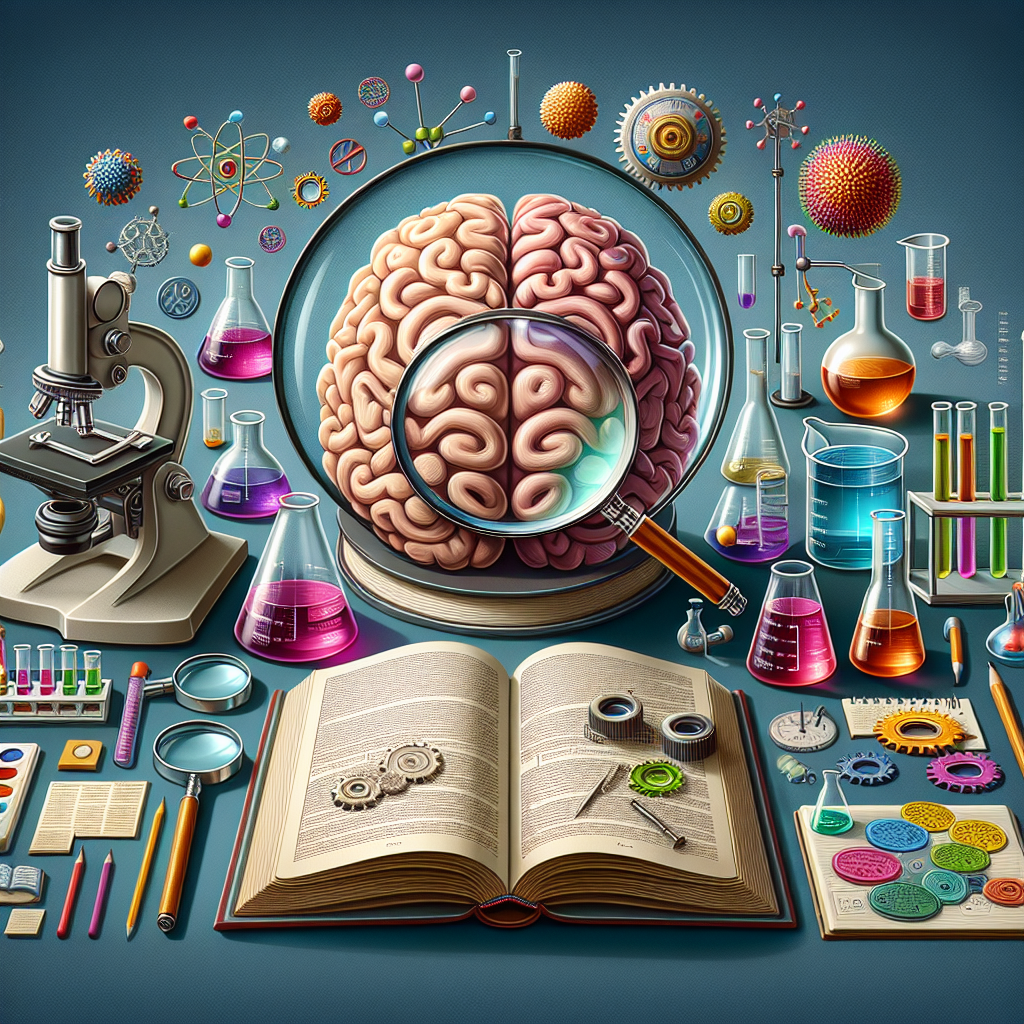
Science is often described as a body of knowledge about the natural world, but its deeper identity is methodological. It is a structured way of asking questions, gathering evidence, and refining explanations. Unlike belief systems that rely primarily on authority or tradition, science depends on public reasoning: claims should be testable, evidence should be shareable, and conclusions should remain open to revision when new data arrive.
This “self-correcting” character is not a flaw; it is the core strength. Scientific understanding changes because reality pushes back—through experiments that fail, measurements that disagree, or predictions that do not match observations. Over time, this process tends to converge on models that are more accurate, more useful, and often more elegant.
The phrase “scientific method” can sound like a single recipe, but real research is messier and more creative. Still, there are common elements that help distinguish scientific inquiry from guesswork.
Importantly, science is not merely about confirming ideas; it is about risking them. A strong scientific claim is one that could be shown wrong by evidence. This commitment to falsifiability and accountability is why scientific conclusions carry special weight in medicine, engineering, and policy.
Scientific knowledge forms a layered structure. Data are raw observations (measurements, images, survey results). Models simplify reality to make it understandable and predictive—such as climate models or models of disease spread. A hypothesis is a proposed explanation for a specific question. A theory, in science, is not a guess; it is a robust explanatory framework that integrates evidence from many sources and makes reliable predictions.
For example, germ theory unifies countless observations in microbiology and medicine and predicts outcomes of sterilization, vaccination, and antibiotic use. Theories earn their status through breadth, coherence, predictive power, and repeated testing—not through certainty. Scientific certainty is rarely absolute; instead, science offers degrees of confidence grounded in evidence.
Precision is a hallmark of science because small errors can lead to big misconceptions. Every measurement carries uncertainty—stemming from instrument limits, sampling issues, or natural variability. Rather than hiding uncertainty, science quantifies it. Confidence intervals, error bars, and probability models are not academic decorations; they are tools for honesty.
Understanding uncertainty also prevents false dilemmas. A study that reports “no significant effect” does not always mean “no effect exists.” It may mean the effect is small, the sample is too limited, or the data are noisy. Scientific literacy includes learning to interpret results cautiously, resisting both hype and cynicism.
Science is done by people—curious, creative, and imperfect. That humanity introduces both strength and vulnerability. Collaboration allows specialization and speed: teams can combine expertise in chemistry, computing, and engineering to solve complex problems. But human biases can influence what gets studied, how results are interpreted, and which findings are published.
These guardrails do not eliminate mistakes, but they make science more trustworthy than systems that lack transparent correction mechanisms.
Science is not one field but a network of disciplines connected by shared standards of evidence.
These branches frequently overlap. Modern breakthroughs—such as medical imaging, renewable energy, and artificial intelligence—often emerge where disciplines intersect.
Science is not confined to laboratories. It quietly underpins the routines of modern life: safe drinking water, weather forecasting, internet communication, and medical diagnostics. Even everyday products—batteries, fabrics, food preservation—are shaped by scientific research and testing standards.
Its benefits also come with responsibilities. Technologies derived from science can be used well or poorly, and scientific progress can create new ethical dilemmas. For instance, gene editing raises questions about fairness, consent, and long-term consequences. Climate science challenges societies to weigh economic costs against planetary stability. Science informs these debates; it cannot replace values, but it can clarify trade-offs and likely outcomes.
You do not need to be a professional researcher to think scientifically. Scientific thinking is a set of habits that help anyone evaluate claims and make better decisions.
At its best, science is a practical philosophy: humility before evidence, courage to revise, and persistence in the face of uncertainty. It teaches that understanding is earned—step by step—by asking better questions and accepting what careful inquiry reveals.
